


















;void(0) "pinterest")
Pupillary Distance Ruler
Print the ABBE PD ruler on A4 paper at 100% scale. Do not use "Fit to Page" or resize the PDF when printing.
Pupillary distance (PD) is the distance, measured in millimeters, between the centers of your pupils. It is used when positioning the optical centers of prescription lenses so they align correctly with your eyes.
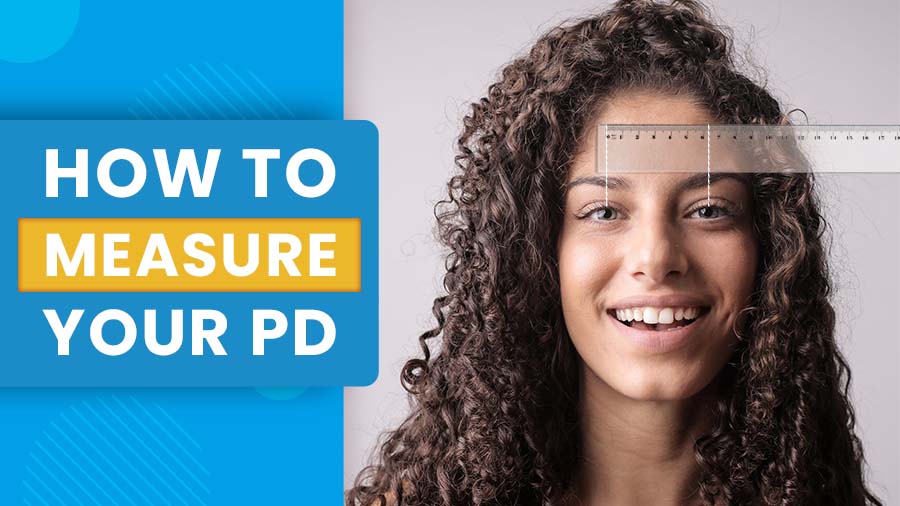
PD is a dispensing measurement rather than a lens power on your eyeglass prescription, so it may not be included with the prescription information you receive after an eye exam. If you do not already have your PD, you can measure it with a millimeter ruler or ask someone to help.
What Is Pupillary Distance (PD)?
Pupillary distance is measured in millimeters and is used to determine where the optical centers of your prescription lenses should be positioned in relation to your pupils.
PD may be recorded as either a single PD or a dual PD.
Single PD: one measurement between the centers of both pupils, for example 62 mm.
Dual PD: separate measurements from the center of the nose bridge to each pupil, for example 31 mm right / 31 mm left.
How to Measure Your PD Yourself
- Stand approximately 8 inches (20 cm) away from a mirror and look straight ahead.
- Hold a millimeter ruler horizontally against your brow and keep it level.
- Close your left eye and align the zero mark of the ruler with the center of your right pupil.

- Without moving your head or the ruler, close your right eye and open your left eye.
- Read the millimeter measurement that lines up with the center of your left pupil. This is your single PD.


- Repeat the measurement a few times. If the results differ, measure again and use a consistent reading rather than guessing between different values.
To obtain dual PD values, measure from the center of the nose bridge to the center of each pupil separately.
How to Measure PD With Someone's Help
You can also ask a friend or family member to take the measurement for you.
- Face the person helping you and look straight ahead. Keep your head still.
- Ask them to hold a millimeter ruler horizontally in front of your eyes and align the zero mark with the center of your right pupil.
- They should read the measurement at the center of your left pupil. This is your single PD.
- Repeat the measurement several times to check that the result is consistent.
- For dual PD, measure from the center of the nose bridge to the center of each pupil separately and record the right and left measurements.
How to Find Your Existing PD
PD is not always included on an eyeglass prescription. It may instead appear in dispensing records, a previous glasses order, or other eyewear measurements provided by your eye care or optical provider.
Look for labels such as:
- PD or Pupillary Distance
- Distance PD or Dist PD
- Near PD
- Separate Right / Left PD values
One PD number usually represents a single PD. Two numbers, such as 31 / 32, usually represent separate right and left measurements.
If you cannot find your PD, you can use the measurement instructions above or ask your eye care or dispensing professional whether they have a previous measurement available.
If you are unsure about your measurement or your glasses require more complex fitting measurements, consider having your PD checked by an eye care or dispensing professional.
Need help understanding the other numbers on your prescription? See our How to Read Your Prescription guide.
Ready to continue? See How to Order Prescription Glasses Online .
